Buying a diamond ring is not a casual purchase, especially online. Even smart, experienced shoppers hesitate when the ring is pre-owned: Is it authentic? Is the condition truly “as described”? Can it be resized? What happens if something doesn’t match?
Those questions are exactly the right ones to ask. A pre-owned ring can be absolutely worth it, but only when the proof is real, and the buying process is designed to reduce avoidable risk.
This guide explains when pre-owned rings make sense, what to verify before you commit, and what a safer marketplace model looks like.
Why buyers consider pre-owned diamond rings in the first place
A pre-owned diamond ring can be worth it when you care about substance over guesswork:
Real materials and craftsmanship: Fine rings are built to last, and many pre-owned pieces remain structurally sound when properly maintained.
Design variety: Pre-owned inventory can include styles that aren’t widely available in today’s retail cycles.
Sustainability and longevity: Extending the life of fine jewelry can be a more responsible way to shop, without compromising on quality.
But none of this matters if the ring’s identity and condition aren’t verified.
The real risks (and why they happen)
Pre-owned rings aren’t risky because they’re “used.” They become risky when buyers are forced to rely on assumptions.
Risk 1: The ring doesn’t match the paperwork
A lab report can be legitimate while the mounted stone may not match it anymore. This can happen through resizing history, repairs, or stone replacement over time.
Risk 2: Wear is hidden or under-described
Common problem areas include:
worn prongs (stone security risk)
thinning bands (structural risk)
loose or missing pavé stones
abrasions or chips that don’t show in standard photos
Risk 3: Sizing uncertainty
Sizing is practical, not cosmetic. A ring that can’t be resized to fit (or can only be adjusted slightly) may become an expensive headache.
Risk 4: The marketplace offers limited protection
On open marketplaces, the burden of proof often sits with the buyer. If disputes are unclear or the process is inconsistent, your risk goes up.
What makes a pre-owned diamond ring “worth it”
Here’s the simplest rule:
A pre-owned ring is worth it when the ring is verifiable, the condition is clear, and the transaction process protects you.
1) Verifiable diamond details
You should be able to confirm the basics:
carat, shape, color, clarity
measurements (especially important for matching)
metal type and setting style
If you want a refresher on how to read diamond quality signals without overthinking it, GEMGEM’s Diamond Guide is a helpful reference.
https://gemgem.com/en/page/diamond-guide
2) Authentication matters more than “having a report”
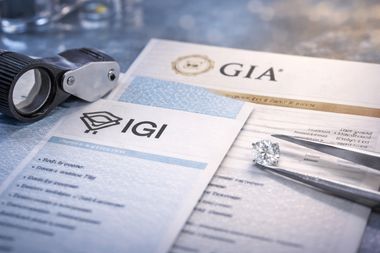
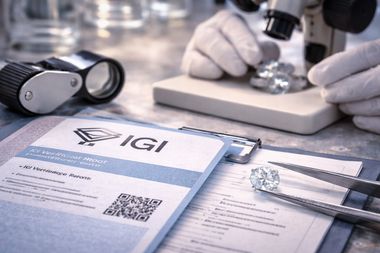
A report is a strong evidence layer. Authentication is what reduces the biggest pre-owned risk: a mismatch between the listing claim and the physical ring.
To understand how verification fits into a safer buying model, reference:
https://gemgem.com/en/page/igi-verification
3) Condition clarity: look where problems actually show up
Before you buy, you should have enough information to judge the condition like an owner would. Pay special attention to:
prongs and stone security
band thickness and symmetry
pavé integrity (if applicable)
signs of prior repairs or heavy resizing
If details feel vague, treat it as “not enough proof yet.”
4) Fit and resizing: check feasibility early
Resizing isn’t always unlimited; design and construction matter. GEMGEM has a dedicated guide explaining typical resizing eligibility and limits by ring type (solitaire, pavé, eternity, etc.).
https://gemgem.com/en/page/sizing-resizing
Quick checklist before you decide
Use this checklist to decide if a pre-owned ring is worth it for you:
Do I have clear, consistent specs (not “estimated”)?
Is there a verification/authentication step that confirms the ring matches its claims?
Is the condition explained clearly (especially prongs, pavé, band thickness)?
Can the ring be resized to my size (and by how much)?
What buyer protection exists if something doesn’t match?
If you can’t confidently answer these, pause, don’t rush.
What a safer marketplace process looks like (and why it changes everything)
For pre-owned rings, the “worth it” decision depends heavily on the process, not just the listing.
A safer process typically includes:
Seller identity checks
Item detail verification before listing
Authentication before delivery
Payment protection tied to verification
Clear post-purchase options (returns/resale pathways)
GEMGEM’s buying flow describes a model that includes seller ID verification, item detail verification by a professional team, and IGI authentication before delivery. It also describes funds held in escrow and released only after authentication, plus optional refurbishment/resizing and a 7-day return reference.
If you want to see the full process in one place:
https://gemgem.com/en/buying
Where to browse (soft next step)
If you’re early in your search, it’s often easiest to browse within consistent, structured categories, so you can compare rings based on clear information.
Verified pre-owned diamond rings: https://gemgem.com/en/category/ring
Authenticated loose diamonds (for custom ring plans): https://gemgem.com/en/category/diamonds
Pre-owned diamond earrings: https://gemgem.com/en/category/earring
Pre-owned diamond necklaces: https://gemgem.com/en/category/necklace
These pages help cautious buyers build “pattern recognition” for what a well-described, lower-risk listing looks like.
Conclusion
So, are pre-owned diamond rings worth it? Yes, when you’re buying with the right proof layers:
clear specs + documentation
authentication that confirms the ring matches its claims
condition transparency
resizing clarity
a marketplace process that protects you if something is off
If you keep the decision anchored to verification and process, not hype, you can shop pre-owned with far more confidence and far fewer unknowns.