If you’re deciding between a natural diamond and a lab-grown diamond, you’re not just choosing a stone; you’re choosing a value model.
Both can look beautiful. Both can be graded by a gem lab. And to most people, both can appear identical at a glance. That’s exactly why cautious buyers often feel stuck: If they look the same, why do they exist in different markets, and why does the buying process matter so much?
This guide explains what you’re really paying for with each option, what “value” actually means in diamond terms, and how to protect yourself, especially when buying pre-owned.
The fundamental difference isn’t sparkle, it’s origin and supply
At the simplest level:
Natural diamonds are formed in the earth over a long geological time and then mined.
Lab-grown diamonds are created in a controlled environment using technology that produces a diamond crystal.
Visually, both can be stunning. The practical difference is that origin changes how the market behaves:
Natural diamonds exist in a finite supply as a mined resource.
Lab-grown diamonds are produced through a repeatable manufacturing process, meaning availability can scale with production.
For buyers, this matters because the “story” behind a diamond often includes its scarcity, market tradition, and long-term demand, not only how it looks today.
What you’re paying for with a natural diamond
A natural diamond typically carries value from a mix of:
1) Rarity and market tradition
Natural diamonds are traded in a long-established global market. Collectors and many traditional buyers place value on the fact that the stone is a finite, mined resource.
2) Higher sensitivity to quality details
In natural diamonds, cut quality, color/clarity combinations, and lab grading consistency can make a meaningful difference in desirability, especially for buyers who care about long-term ownership.
3) Resale relevance
Many buyers choose natural diamonds because they want a stone that can be re-owned, re-set, and re-sold more predictably over time (even if resale isn’t your goal today).
If you’re browsing natural diamonds online, start by comparing like-for-like grading details in a structured category such as loose diamonds (not mixed jewelry listings). A clean place to begin is “View all natural diamonds” in GEMGEM’s diamonds category:
https://gemgem.com/en/category/diamonds
What you’re paying for with a lab-grown diamond
Lab-grown diamonds create value in a different way:
1) Technology and controlled production
You’re paying for a process that can produce diamond material with strong optical beauty and a controlled supply chain.
2) Size-per-budget efficiency
Many buyers choose lab-grown because they want a larger visual presence for the same overall spend. (This is a preference choice, not a “right vs wrong.”)
3) A different relationship with long-term ownership
Because lab-grown exists in a manufacturing model, buyers often evaluate it more like a luxury purchase based on today’s look and enjoyment rather than long-term market scarcity.
The key point: lab-grown can be an excellent personal choice, as long as it’s clearly disclosed and accurately graded.
The real risk: not choosing “wrong,” but buying without verification
Most buyer regret doesn’t come from choosing natural vs lab-grown. It comes from one of these failures:
The diamond (or jewelry) doesn’t match the listing description
A grading report is referenced, but it doesn’t match the exact stone in the setting
The listing uses unclear terms that hide whether a stone is natural or lab-grown
The marketplace process provides no strong checkpoints before delivery
That’s why certification + authentication + marketplace process matter more than most first-time buyers expect.
Certification vs authentication: what actually protects you
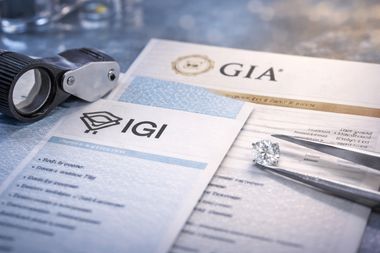
A grading report describes a stone’s characteristics at the time it was examined. It’s valuable, but it doesn’t automatically protect you from mismatch risk in pre-owned.
Authentication is the protective layer that helps confirm the item you are buying matches what’s being claimed, before you receive it.
GEMGEM positions its buyer journey around verification steps, including Seller ID verification, item detail verification, and IGI authentication before delivery.
This matters most in pre-owned, where items can have history (resizing, repairs, re-setting) and photos alone aren’t enough.
If you want to go deeper into lab standards and what they cover, GEMGEM’s Diamond Guide is a helpful evergreen reference:
https://gemgem.com/en/page/diamond-guide
Buying pre-owned: why natural diamonds can be a smart choice when the process is strong
Pre-owned doesn’t mean “cheap.” It means pre-owned ownership, and the buyer’s safety depends on verification.
A well-run pre-owned model reduces risk by ensuring:
The item is verified before shipping
The buyer’s funds are protected through the process
mismatches don’t become the buyer’s problem to solve alone
GEMGEM frames this via its Buyer Protection approach:
https://gemgem.com/en/page/buyers-protection
When you combine a trusted verification flow with pre-owned inventory, buyers often get the best of both worlds: the confidence of authenticity + the efficiency of a resale marketplace, without the uncertainty that comes with random sellers.
A practical decision framework (simple and buyer-focused)
Use these questions to choose with confidence:
Choose natural if you value:
long-term ownership and legacy meaning
scarcity as part of value
stronger relevance to traditional resale demand
verified documentation and a consistent buying process
A good place to explore is verified pre-owned diamond rings:
https://gemgem.com/en/category/ring
Choose lab-grown if you value:
the look and size you want today
controlled production and a tech-driven origin story
a purchase decision based primarily on personal enjoyment
(Just be strict about disclosure and lab grading.)
Either way, your best protection is not “the stone type”, it’s verification and clarity.
Where to browse safely (without feeling pushed)
If you’re exploring categories, use structured browsing so comparisons stay logical:
Authenticated loose diamonds: https://gemgem.com/en/category/diamonds
Diamond rings: https://gemgem.com/en/category/ring
Diamond earrings: https://gemgem.com/en/category/earring
Diamond necklaces: https://gemgem.com/en/category/necklace
Diamond bracelets: https://gemgem.com/en/category/bracelet
Diamond pendants: https://gemgem.com/en/category/pendant
Gemstones: https://gemgem.com/en/category/gemstones
If you want to understand the verification flow end-to-end before browsing, GEMGEM’s buying journey is here:
https://gemgem.com/en/buying
GEMGEM as a safer pre-owned model
For cautious buyers, the best marketplaces are the ones that do the verification work before delivery, not after the fact.
GEMGEM also repeatedly states a clear inventory stance on listings such as: “Only natural, mined stones, & never lab-grown.”
And its trust promise is summarized via its Authenticity Guarantee and IGI-related verification pages:
https://gemgem.com/en/page/authenticity-guarantee
https://gemgem.com/en/page/igi-verification
Conclusion
Natural vs lab-grown is not a test of which diamond is “better.” It’s a decision about what kind of value you want, scarcity and tradition vs technology and personal preference.
If you’re buying pre-owned, your real advantage comes from doing it through a process that verifies what you’re buying before it reaches you. Once you understand the difference, browsing becomes easier, calmer, and much more confident.
If you ever feel uncertain while comparing options, GEMGEM’s Help Center is a good reference point:
https://gemgem.com/en/help-center