

JavaScript is required
Mobile hero background

Certificates &<br />Verification

Because a Diamond’s Beauty is Proven, Not Just Seen

IGI Logo MobileGIA Logo Mobile

What is a Diamond <br />Certificate?

A diamond certificate (often called a grading report) is an independent document that records a diamond's measurable characteristics — so you can buy with confidence, not guesswork.

A Certificate Should Include:

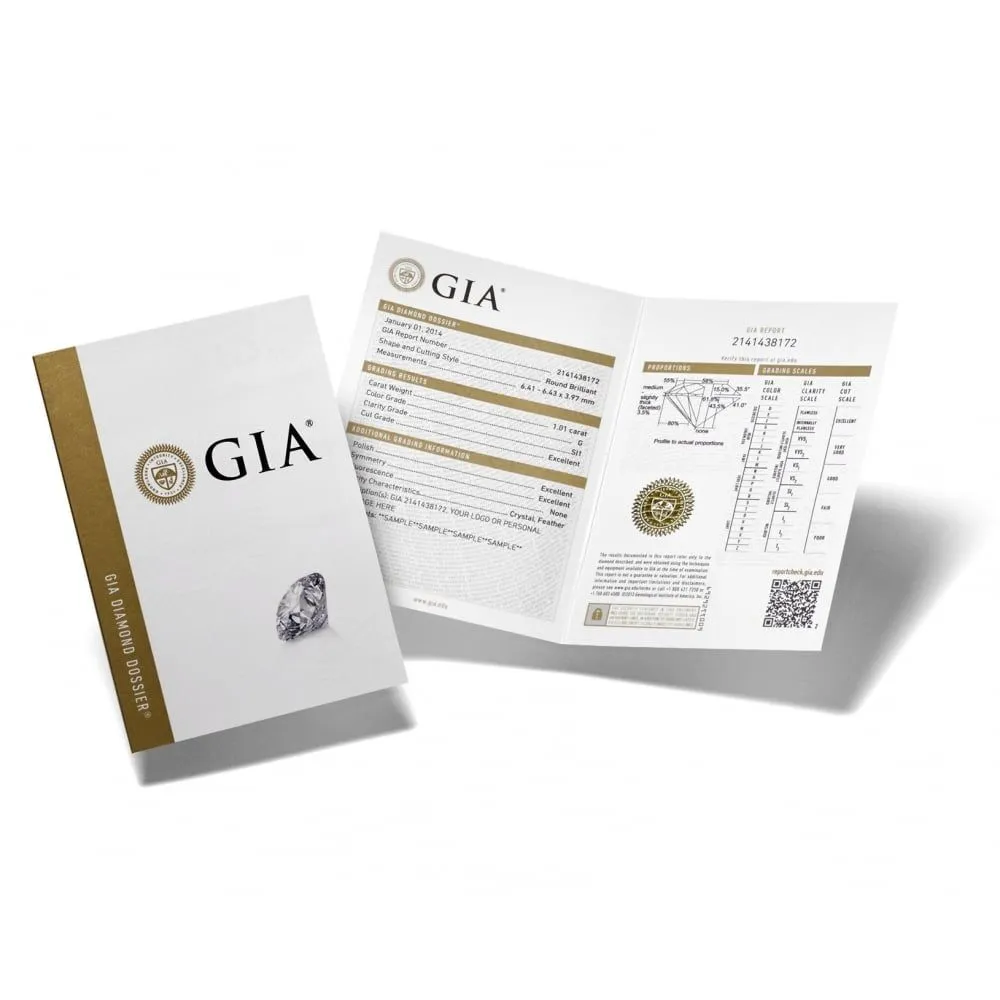
  • Report Number (unique ID for that diamond/report)
  • Measurements (in mm)
  • Color Grade
  • Cut Grade
  • Fluorescence
  • Carat Weight
  • Clarity Grade
  • Polish & Symmetry
  • Shape & Cutting Style
  • Clarity characteristics and often a Clarity Plot
What Is Diamond Certification?

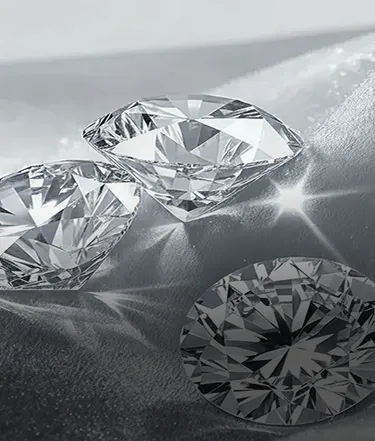
Diamond certification is the process where a lab examines a diamond and issues a report documenting its results. A good report is designed to be unbiased and consistent, so you can compare diamonds properly.

Diamond Grading Report vs Diamond Dossier: What's the Difference?

GIA offers multiple report formats depending on diamond type/size and service level.

Diamond Grading Report (GIA)

  • Full 4Cs assessment
  • Plotted clarity diagram
  • Proportion diagram
  • Laser inscription may be optional

Diamond Dossier (GIA)

  • Full 4Cs assessment
  • No Plotted Diagram
  • Report Number Laser Inscription

Diamond eReport (GIA)

  • Full 4Cs assessment
  • Face-up Diamond Image

Diamond Focus Report (GIA)

  • Key Grading Details + Laser Inscription
  • No Plotted diagram / No Proportion Diagram
Diamonds background
Which Labs Matter Most?

Not all labs grade with the same strictness. The most widely recognised names include:

GIAGemological Institute of America

Widely recognized for consistent grading standards and reliable verification tools.

IGIInternational Gemological Institute

Globally recognized 4Cs grading and verification for all diamond types.

AGSAmerican Gem Society

Light performance pioneer; "Ideal" standards now integrated as a GIA supplement.

GEMGEM Recommendation

Never purchase a diamond (especially higher-value pieces) without credible documentation. A proper grading report protects your purchase and supports resale value.

Certificate vs Appraisal

These terms get mixed up a lot:

Grading Report / "Certificate": Describes the diamond's quality and identifying features, issued by an independent lab.

Appraisal: A value estimate (often for insurance) and can vary depending on assumptions, market conditions, and the appraiser.

Diamond verification hero

How to Verify a Diamond <br />Certificate

(Do This Before You Buy)

Step 1

Use the lab's online verification tool

Verify GIA authenticity by entering the report number or scanning the QR code on the GIA Report Check website.

Step 2

Match the stone to the report (when possible)

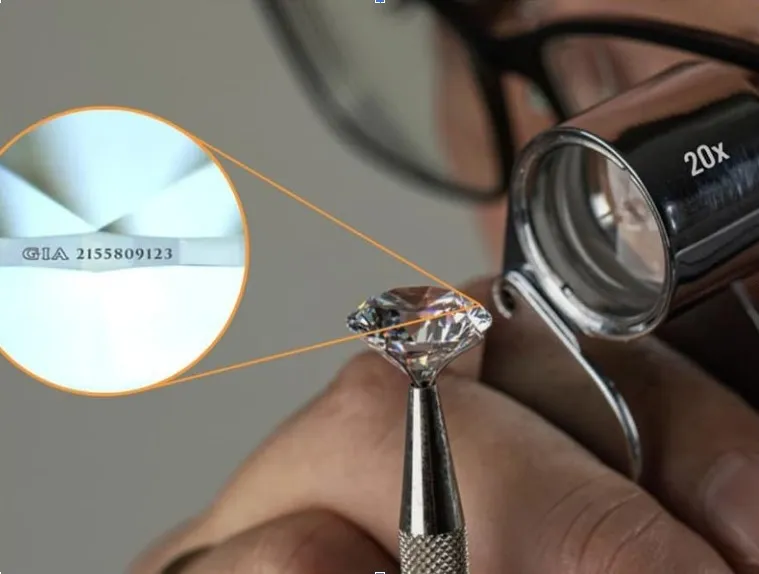
Many diamonds have the report number laser-inscribed on the girdle, linking the physical stone to its paperwork.

Step 3

Confirm the report type fits the situation

Verify set stones using the original report, laser inscription, or a professional appraisal to avoid unsetting the diamond.

Next Step

Ready to put your knowledge to use? Browse GIA certified loose diamonds on GEMGEM.

GIA certified loose diamonds
Deep blue silk texture
2026 Note

Natural Vs Lab-Grown Certificates Aren’t Always The Same Format

If you’re comparing natural diamonds and lab-grown diamonds, don’t assume the paperwork will look identical — even when both are from reputable labs.

What you need to know

Natural diamond reports usually list the diamond’s quality using the familiar 4C’s (Carat, Color, Clarity, Cut) in a standard grading format.

Lab-grown diamond reports vary by laboratory; some use the traditional 4C’s breakdown, while others use a unique assessment format or different wording.

Why this matters

Two diamonds can look similar on paper, but the reports might be written in different systems — so it's not always an "apples-to-apples" comparison.

Best practice

  • 01.Is the diamond Natural or Lab-Grown?
  • 02.Which lab issued the report?
  • 03.Does the report show 4C’s grading, or a different assessment format?

Why a Diamond Certificate is so Important (The "5th C")

Many buyers call certification the "5th C" because it protects you in real life, not just on paper.

Confidence

You're buying the diamond that was advertised (Identity + Quality)

Insurance & Repairs

Easier to insure, service, and verify later

Resale Value

Buyers trust documented diamonds more (Stronger liquidity and pricing)

Diamond background

Carat Weight on a Certificate

On a GIA certificate, carat weight is recorded and <br />rounded to two decimal places (for example, 1.06 ct).

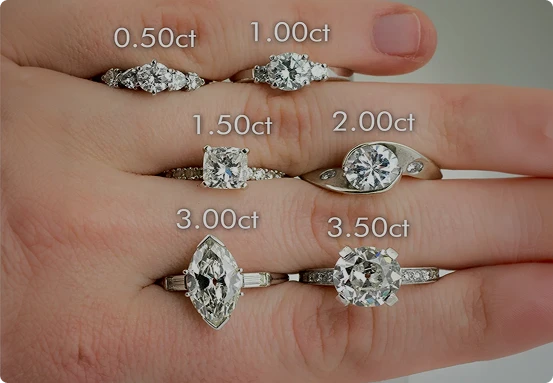
Comparison of diamond carat sizes

Magic Sizes and Smart Value Picks

Major carat thresholds (like 1.00 or 3.00) carry price premiums. Savvy buyers choose "magic sizes"—diamonds weighing just under these marks (e.g., 2.90 ct vs. 3.00 ct)—to get a nearly identical visual appearance at a significantly lower price point.

Making Carat Look Bigger:
Shape, Setting & Proportion

Shape

Fancy shapes like ovals or emeralds offer better value than rounds, which cost more due to high demand. While carat weight drives price, cut quality is what truly determines a diamond's sparkle and beauty.

Settings

A well-chosen setting enhances a diamond's appearance: halos create a larger, more dramatic look, while thin or pavé bands add contrast to make the center stone pop with extra brightness and sparkle.

Proportions

Diamond size is always relative. A stone can look more prominent on a slender finger and more balanced on a wider finger. The best look comes from matching the diamond's shape and setting to the wearer's hand proportions.

How to Read a GIA Report: A Simple Walkthrough

Report number & verification: Check it on GIA Report Check

Shape + measurements: Confirm the outline and mm size (this affects "looks big" more than people expect)

4Cs: Carat, Color, Clarity, Cut

Finish: Polish + Symmetry

Fluorescence: Note intensity

Clarity plot (if included): Use it as an ID map — no two are exactly the same

Laser inscription: If present, it helps physically match the diamond to the report

Diamond background mobile

Quick Buyer Checklist

  • Do I have a report from a recognized lab (GIA / IGI)?

  • Can I verify the report number online?

  • If the diamond is high-value: can I confirm a matching inscription on the stone?

  • Do I understand whether this diamond is natural or lab-grown, and what format the lab uses?

Looking for a specific shape? Explore round brilliant cut diamonds backed by GIA certification.

Shop round GIA diamonds

Buyer Resource

Diamond Buying Guide

Learn how to buy diamonds safely — the 4Cs, GIA & IGI certificates, shapes, and what to avoid. Written for real buyers.

Read the Guide
The marketplace where fine jewelry holds its value.
GIA & IGI Certified
100% Secure Escrow
Fast Ship Available
Insured Delivery Available
30-Day Commission-Free Resell
JVC Logo